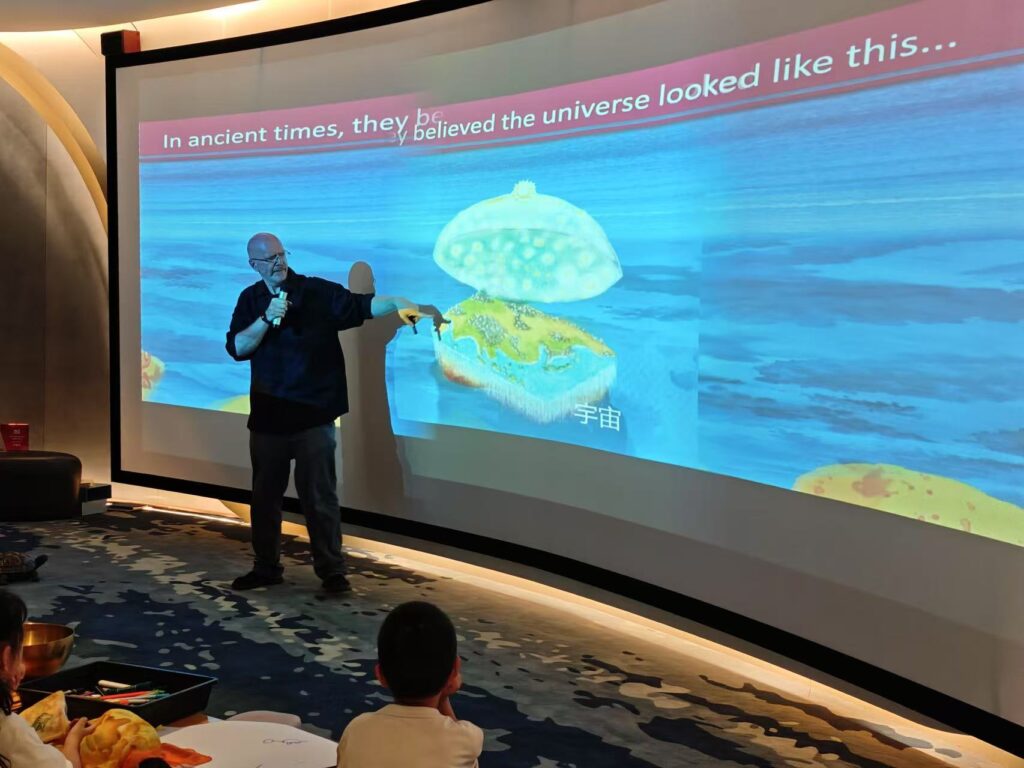
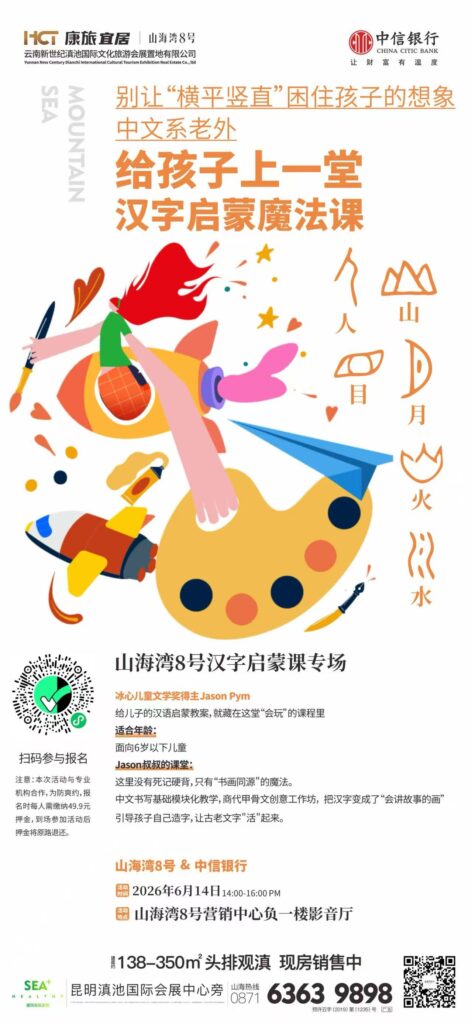
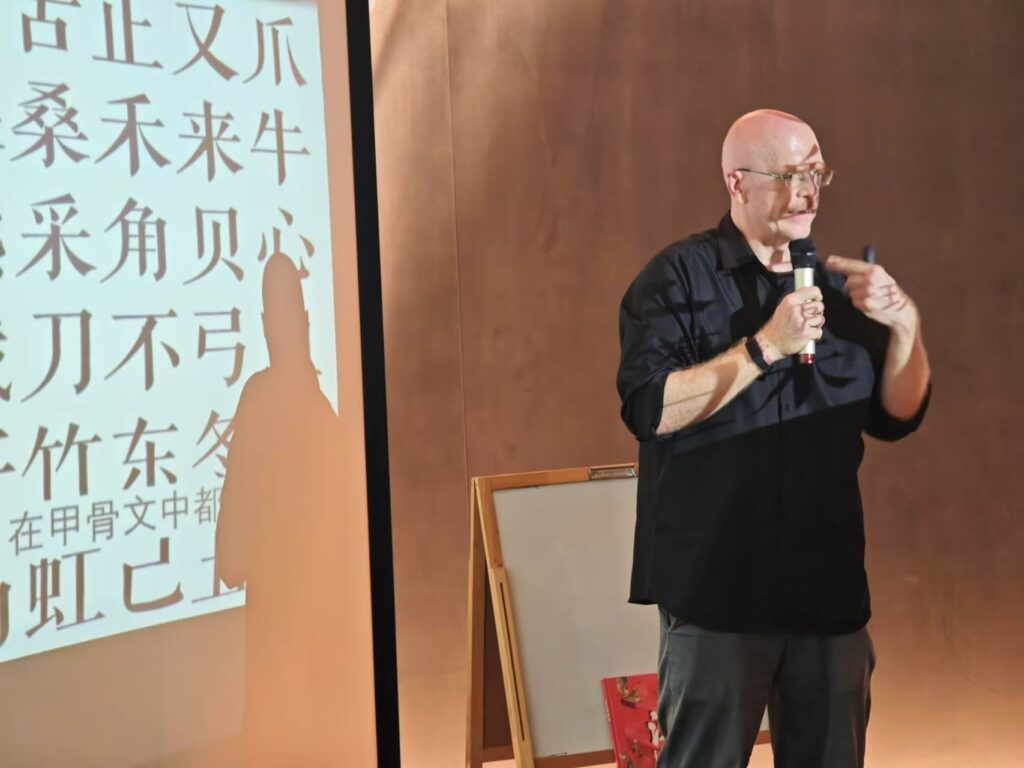
An afternoon of drawing and talking about Chinese characters with keen kindergarteners. Thank you very much to Dake at UniCorn, Jingyi and and Chen Linxi from Yongye Education, and our hosts at Shanhaiwan.
跟一个与热情洋溢的幼儿园孩子们一起绘画和探讨汉字的下午。非常感谢UniCorn的大可、永烨教育的静怡和陈林希,以及我们山海湾的接待方。
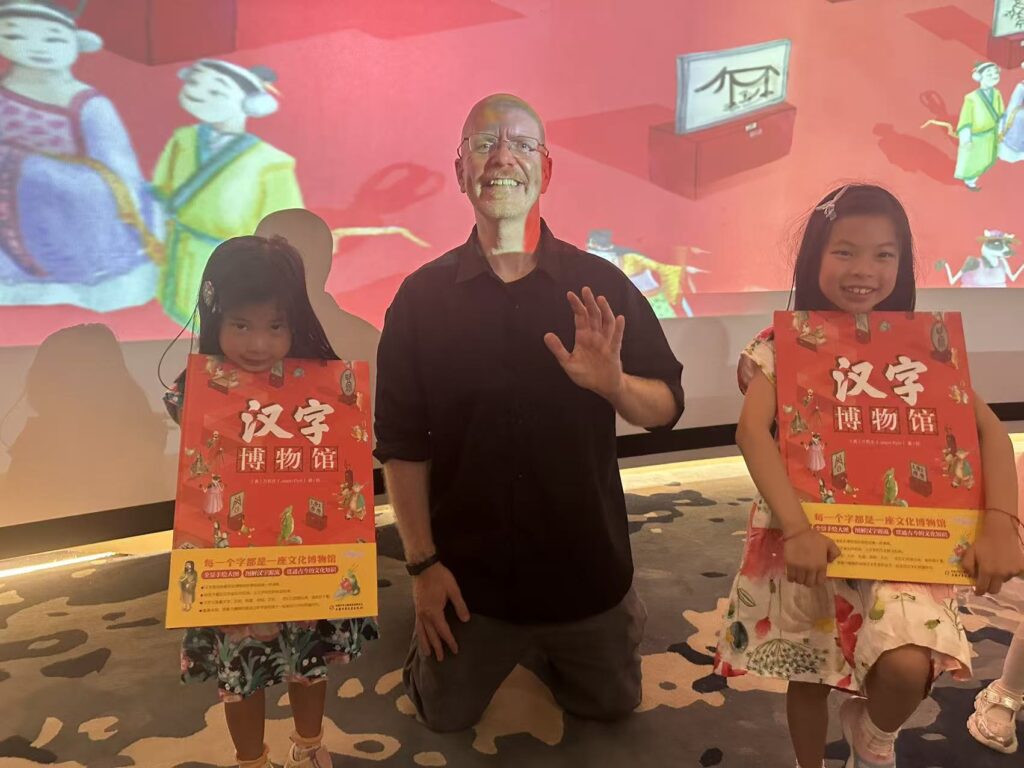
Up to now I’ve been aiming the Chinese character course at students in grade 2, 3, 4 (7 – 10 year olds), but this has a drawback – they have already learned the characters by rote, and if I tell them the story behind the character it’s surplus information. It doesn’t help anything, it’s more of a passing interest…
迄今为止,我一直将汉字课程的目标群体设定为二、三、四年级(7至10岁)的学生,但渐渐发现一个问题:这些孩子已经死记硬背过这些汉字了,如果我向他们讲解汉字背后的故事,这些信息就变成了冗余内容。这对学习并无帮助,顶多算是一时趣味……
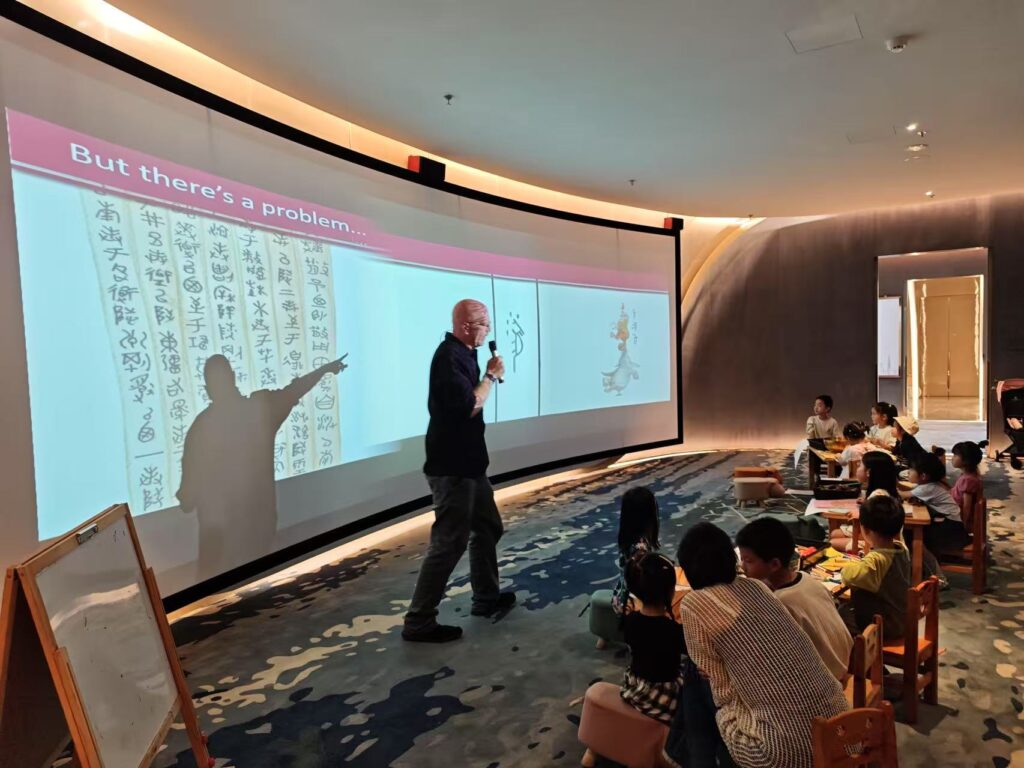
But it occurred to me that if I introduced the characters to kindergarten age kids who haven’t yet learned to read and write, then it suddenly becomes a useful learning tool.
后来我灵机一动:要是教还没开始学写字的幼儿园小朋友呢?这些内容就会立刻转变为实用的学习工具。
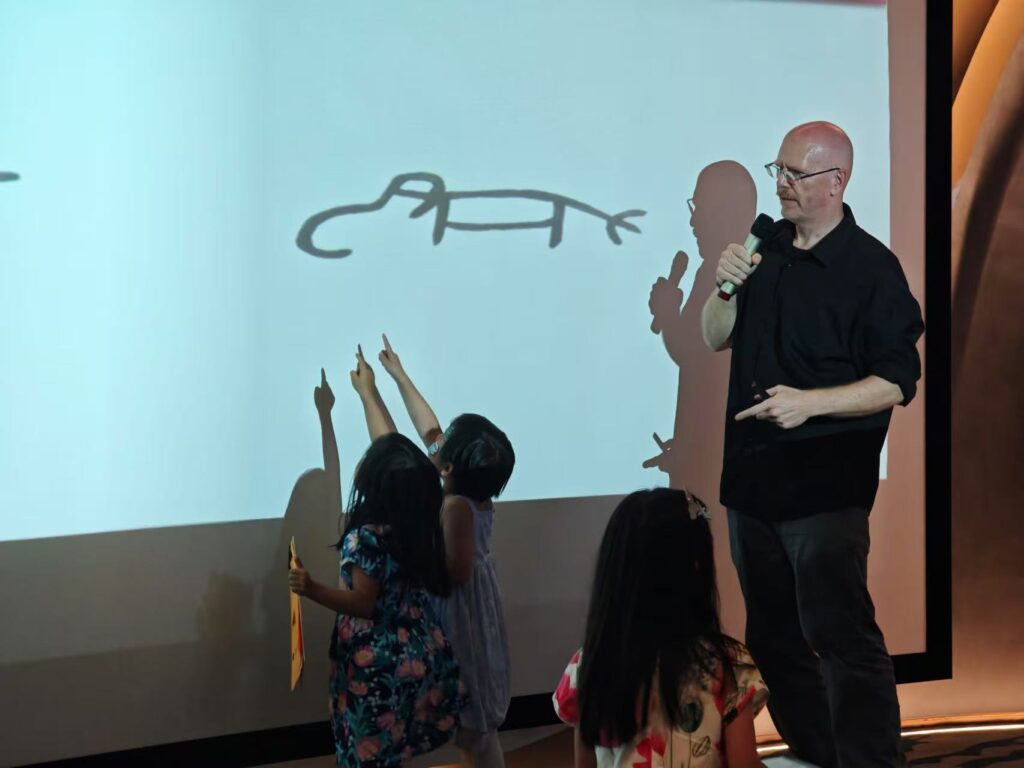
I start with the picture, then go on to the Shang dynasty pictogram, then eventually the modern character. They can trace the various parts, so that what looks like an abstract jumble of lines and dots in a modern character is actually feet, a tail, a mouth, horns. They start to see the visual logic of how characters are built.
我的教学从图画开始,接着展示商代的象形文字,最后呈现现代汉字。孩子们可以描摹各个部件,于是那些在现代汉字中看似杂乱无章的线条和点画,实际上可能是脚掌、尾巴、嘴巴或犄角。他们开始领悟汉字构成的视觉逻辑。
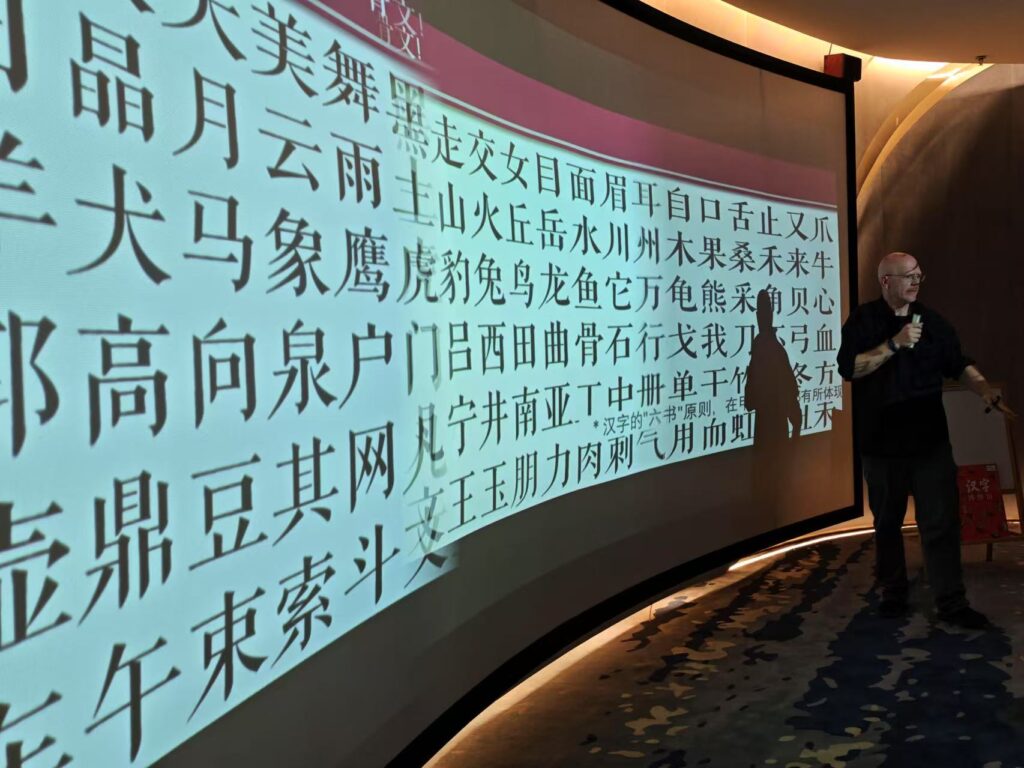
But this was only the second time I’ve taught to that age range – there were things that are just too complex or out of their field of experience. The story of Chinese characters is tied up with divination, bronze casting, silk manufacture and all sorts, this is just not relevant to a five year old. I’ll have to drop it next time.
不过这仅是我第二次教授这个年龄段——有些内容确实过于复杂或超出他们的认知范围。汉字的故事与占卜、青铜铸造、丝绸生产等诸多事物交织,这些对五岁孩童毫无意义。下次授课时我得剔除这些内容。
Leave a Reply